
Can Fabric Ducting Support Infection Control in Hospitals?

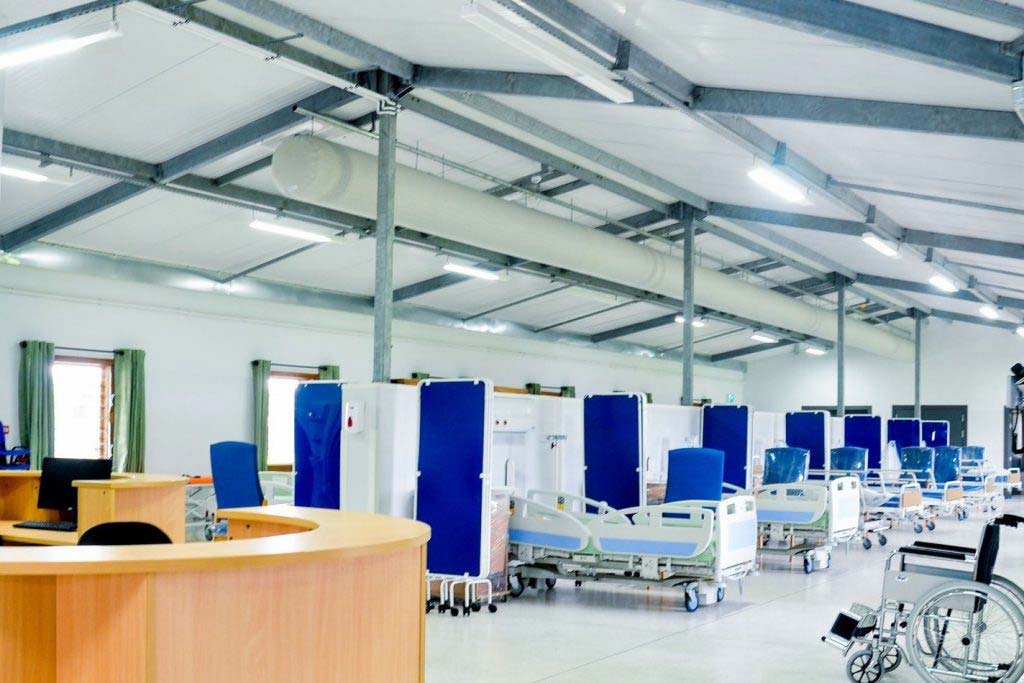
Hospitals rely on controlled airflow to reduce the spread of airborne contaminants. In areas such as wards, operating theatres, and treatment rooms, ventilation is part of everyday infection control rather than a background system. The way air is introduced, circulated, and removed can influence how particles move within a space.
For healthcare environments and hospital ventilation, fabric ducting is one approach commonly used to manage airflow more evenly. To understand whether it supports infection control, it helps to look at how air behaves in practice.
How does airflow affect infection risk?
Air does not stay still indoors. It moves around people, equipment, and furniture. When airflow is uneven, pockets of stagnant air can form. These areas allow airborne particles to linger rather than being diluted or removed.
In a hospital setting, this can affect how quickly contaminants disperse. A system that delivers air from a single point at high speed may create drafts while leaving other areas less ventilated.
Fabric ducting improves airflow by distributing air along its length through small openings. This can allow air to enter a room more evenly, reducing the likelihood of concentrated airflow in one area and limited movement in another.
How important is airflow consistency?
In practice, consistency often matters more than raw airflow volume. Staff and patients move throughout a room, so ventilation needs to perform across the entire space rather than in isolated zones.
Fabric ducting can be designed to release air gently and evenly. This helps maintain a more stable environment where fresh air reaches multiple points rather than being focused in one direction.
For infection control, this type of distribution can support dilution of airborne particles. It does not remove the need for filtration or extraction systems, but it can contribute to how effectively air is mixed.
How does ventilation impact hygiene?
One of the practical considerations in healthcare environments is how easily ventilation systems can be cleaned. Dust and particles can accumulate over time, particularly in systems that are difficult to access.
Fabric ducting can be removed and washed, which allows for more thorough cleaning than some fixed systems. In areas where hygiene standards are high, this can support regular maintenance routines.
Does fabric ducting help with temperature control?
Infection control is not only about airflow, staff and patient comfort also plays a role. If a space feels too cold or too warm, windows may be opened or equipment adjusted in ways that affect ventilation performance.
Fabric ducting can help deliver air in a way that avoids strong drafts. This can make the environment more comfortable, which in turn supports consistent use of the ventilation system as intended.
What are the limitations?
Fabric ducting is one part of a wider system. It does not replace filtration, pressure control, or air change requirements that are set by healthcare standards.
In critical areas such as operating theatres, ventilation systems are designed to meet strict specifications. Fabric ducting may be used in some areas but not others, depending on the level of control required.
The suitability of fabric ducting depends on the specific space, how it is used, and how it integrates with the overall ventilation design.
Fabric ducting can support infection control by helping distribute air more evenly and allowing for easier cleaning in certain environments. Its effectiveness depends on how it is designed, installed, and maintained as part of a complete ventilation system.
In healthcare settings, attention to airflow patterns, hygiene routines, and system performance all contribute to managing infection risk. Fabric ducting can play a role within that broader approach.
FAQs
Does fabric ducting prevent infections in hospitals?
It supports airflow distribution, which can help reduce airborne particle concentration, but it works alongside other systems.
Is fabric ducting hygienic enough for healthcare use?
It can be removed and washed, which helps maintain hygiene when cleaning schedules are followed.
Can fabric ducting replace traditional ventilation systems?
It forms part of a ventilation system but does not replace filtration or pressure control requirements.
Where is fabric ducting used in hospitals?
It may be used in wards, corridors, or support areas depending on design requirements.
Does airflow distribution affect infection control?
Yes, more even airflow can help dilute airborne particles and improve overall air quality.
Looking for more information?
Our experts are on hand to answer any questions. Why not give us a call or drop us a message, We’ll work with you to find the right solution.
Contact us
