
Do Fabric Ducting Systems Improve Indoor Comfort?

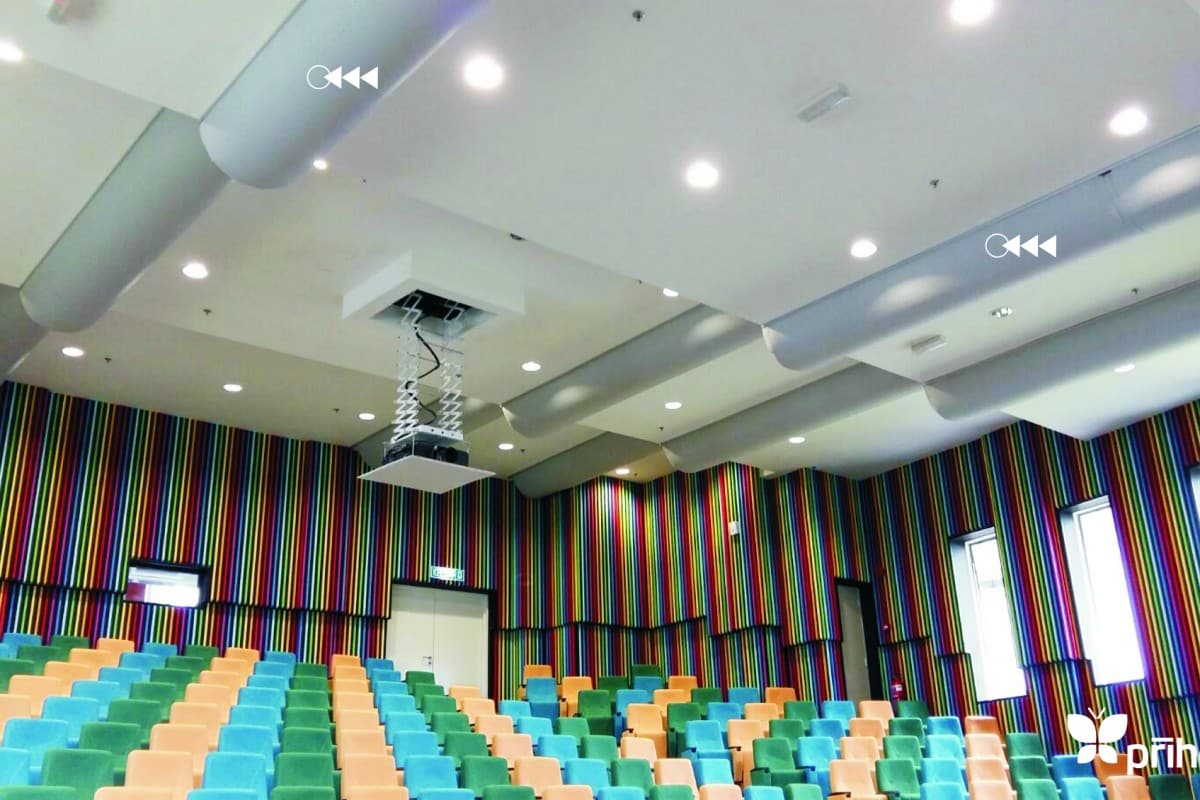
Indoor comfort is often discussed in terms of temperature, but anyone who has worked beneath an air-conditioning vent knows there is more to it than the thermostat. A room can be technically at the correct temperature while somebody sitting beneath a strong stream of cold air is reaching for a jumper.
This is where air distribution becomes important. Fabric ducting systems are designed to spread conditioned air across a larger area, which can help create more even temperatures and control the speed at which air reaches people in the room.
Why Does Air Distribution Affect How Comfortable a Room Feels?
Traditional ventilation systems commonly deliver air through individual grilles or diffusers. If a large volume of cooled air needs to pass through a relatively small outlet, people sitting nearby can sometimes feel a noticeable draught.
Elsewhere in the same room, there may be relatively little air movement. This can contribute to differences in temperature between one area and another.
Fabric ducting provides a much larger surface through which air can be introduced. Depending on the design, hundreds or thousands of small perforations can distribute the available airflow along the length of the duct.
The result can be slower, more evenly distributed air movement within occupied areas. CIBSE guidance notes that textile systems can deliver large volumes of cooling air at relatively low velocities.
Can Fabric Ducting Reduce Uncomfortable Draughts?
It can, provided the system has been designed correctly. Micro-perforations can release large volumes of air at very low velocity, which is particularly useful for cooling applications where cold air blowing directly onto people would be uncomfortable. Larger perforations or nozzles can be used where air needs to travel further, such as when heating a warehouse from a high-level installation.
This flexibility matters because different buildings require very different airflow patterns. A school classroom filled with seated pupils has different requirements from a warehouse where workers are spread across a large floor area.
The position of the duct, supply temperature, airflow, and location of occupants all need to be considered during design.
Can Fabric Ducting Help Maintain a More Even Temperature?
Temperature differences often become noticeable in large or high-ceilinged spaces. Warm air naturally rises, while poorly distributed cooled air may concentrate around individual outlets.
A carefully designed fabric system can direct air towards specific areas or distribute it more broadly across the room. At Prihoda UK, we design systems around factors including air volume, temperature, pressure, and the required air pattern.
In practice, this can help reduce situations where one workstation feels cold while another part of the building remains noticeably warmer.
The design still matters considerably. Simply installing fabric ducts does not guarantee an even temperature. The perforation pattern and airflow need to suit the size, shape and use of the building.
Does Ventilation Noise Affect Indoor Comfort?
Noise reduction is easily overlooked when specifying ventilation, particularly in offices, classrooms, and other environments where people need to concentrate.
Air travelling at high speed through a small outlet can generate noticeable noise. Rigid ductwork can also transmit vibration through the system.
Fabric ducts can operate with relatively low air velocities and the material itself does not transmit sound like rigid metal. Prihoda UK calculates expected noise levels as part of individual system designs, taking account of factors such as airflow, pressure, bends and diffuser selection.
For a factory, a few extra decibels may make little practical difference. In a meeting room or classroom, they can be much more noticeable.
Where Can Fabric Ducting Make the Greatest Difference?
Fabric systems are particularly useful where people spend long periods within the occupied area and consistent air distribution matters.
Schools, offices, leisure facilities, and retail environments are obvious examples. Industrial buildings can also benefit, especially where traditional high-level ventilation struggles to deliver conditioned air effectively to people working below.
The same principle applies in food production facilities and other large spaces where substantial volumes of air need to be supplied without creating excessive localised air speeds.
Ultimately, comfort depends on the complete ventilation design. Fabric ducting provides more options for controlling where air travels and how quickly it reaches occupants, giving designers greater scope to deal with the practical causes of draughts, temperature variation and ventilation noise.
FAQs
Does Fabric Ducting Stop Draughts Completely?
A correctly designed system can substantially reduce unwanted high-velocity air movement, although comfort depends on factors such as airflow, temperature, duct position and diffuser design.
Can Fabric Ducting Be Used for Both Heating and Cooling?
Yes. Different perforations and nozzles can be selected depending on whether air needs to be distributed gently across an occupied area or projected over a longer distance.
Is Fabric Ducting Suitable for Offices?
It can be particularly useful in offices because low air velocities and controlled distribution can help reduce draughts around individual desks. Noise can also be considered during the design process.
Why Do Fabric Ducts Have Different Types of Perforations?
Different openings create different airflow patterns. Very small perforations are useful for distributing large volumes of air gently, while larger laser-cut perforations and nozzles can project air further into a room.
Does Fabric Ducting Automatically Improve Indoor Comfort?
No ventilation system can guarantee comfort simply because a particular type of duct is installed. Air volume, supply temperature, positioning, room layout and occupancy all need to be incorporated into the design.
Looking for more information?
Our experts are on hand to answer any questions. Why not give us a call or drop us a message, We’ll work with you to find the right solution.
Contact us
