
Fabric Ducting for Supermarkets and Retail Spaces

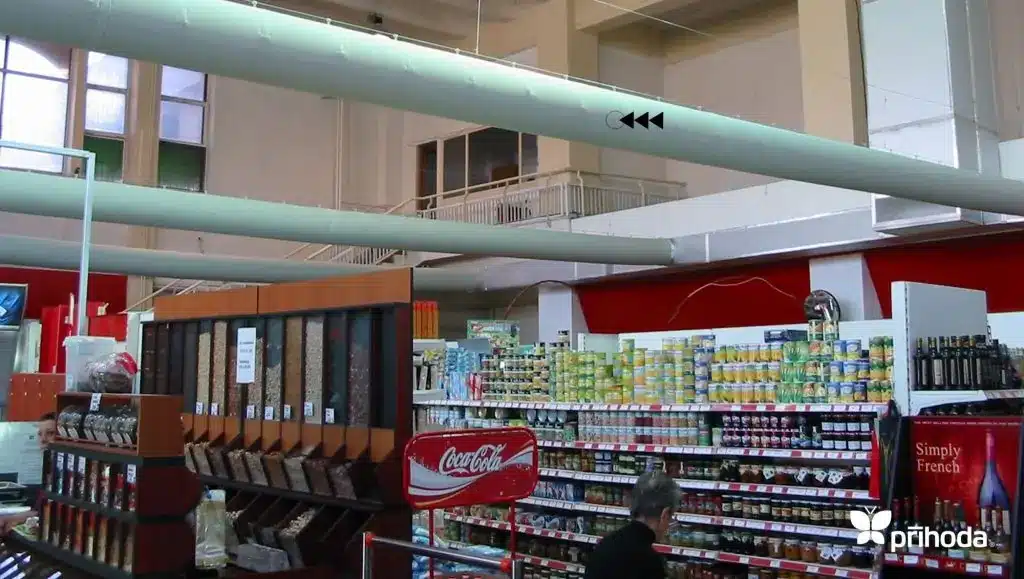
In supermarket and retail spaces, air should move without being noticed, temperatures should stay consistent between aisles, and there should be no obvious source of draughts or noise. Behind that experience is a ventilation system that has been shaped around how the space is actually used.
In retail settings, air needs to reach people, products, and staff across wide floor areas where conditions vary. Refrigeration units create colder zones, lighting and footfall add warmth, and entrances bring in outside air. Fabric ducting allows air to be released along the length of the system through small perforations or outlets, which helps avoid concentrated blasts from a single vent.
Why do supermarkets struggle with ventilation requirements?
Supermarkets tend to have uneven temperature demands. Chilled aisles can feel noticeably cooler, while bakery sections or high traffic areas can feel warmer. Traditional ductwork often delivers air at fixed points, which can leave gaps in coverage.
With fabric ducting, air is introduced more gradually across the space. In practice, this evens air flow and reduces the sharp differences between areas. Staff working across multiple aisles often notice fewer extremes during a shift. For customers, the experience becomes more consistent as they move through the store.
How does fabric ducting support hygiene and maintenance?
Cleanliness is part of daily operations in food retail. Ventilation systems are no exception. Over time, dust and moisture can build up inside any ducting system, which needs to be addressed as part of regular ducting maintenance.
Fabric ducting supports better hygiene and maintenance as it can be removed and cleaned much more easily than rigid systems. Sections can be taken down, washed, and refitted without specialist equipment. This makes it easier for maintenance teams to plan cleaning around quieter trading periods, rather than requiring more disruptive work.
What difference does it make to noise levels?
Supermarkets are rarely quiet. Refrigeration units, customer movement, and general activity all contribute to background noise. Ventilation systems can add to this if air is pushed through at high speed.
Fabric ducting tends to distribute air at a lower velocity, which can reduce the additional noise created by airflow. While it does not remove all sound from the environment, it can help prevent ventilation from becoming another noticeable source of disturbance.
How adaptable is fabric ducting in changing retail spaces?
Retail spaces change more often than many other environments. Shelving layouts shift, seasonal displays are introduced, and full refurbishments can take place over time. These changes can affect how air needs to be delivered.
Fabric ducting can be adjusted with different outlet patterns or repositioned sections to suit updated layouts. This allows the ventilation system to move with the space, rather than remaining fixed in a way that no longer fits how the store operates.
Can fabric ducting support more consistent energy use?
Energy use in supermarkets is influenced by many factors, including refrigeration, lighting, and heating or cooling systems. Ventilation plays a role in how evenly temperatures are maintained across the store.
By distributing air more consistently, fabric ducting can help reduce the need for systems to compensate for uneven conditions. This can support a steadier level of operation, although overall efficiency will still depend on how the wider system is designed and managed.
FAQs
How does fabric ducting improve comfort in supermarkets?
It spreads air evenly across the space, which helps reduce noticeable temperature differences between aisles.
Is fabric ducting suitable for food retail environments?
Yes, its ability to be removed and cleaned makes it practical for settings where hygiene is important.
Does fabric ducting reduce noise in stores?
Lower air speeds can make airflow less noticeable, which may help keep background noise levels more manageable.
Can fabric ducting be adapted after installation?
It can be adjusted or reconfigured to suit changes in store layout or use.
Will fabric ducting lower energy costs?
It can support more consistent airflow, which may help systems run more steadily, although results depend on the overall setup.
Looking for more information?
Our experts are on hand to answer any questions. Why not give us a call or drop us a message, We’ll work with you to find the right solution.
Contact us
