
Is Fabric Ducting a Good Option for Warehouses?

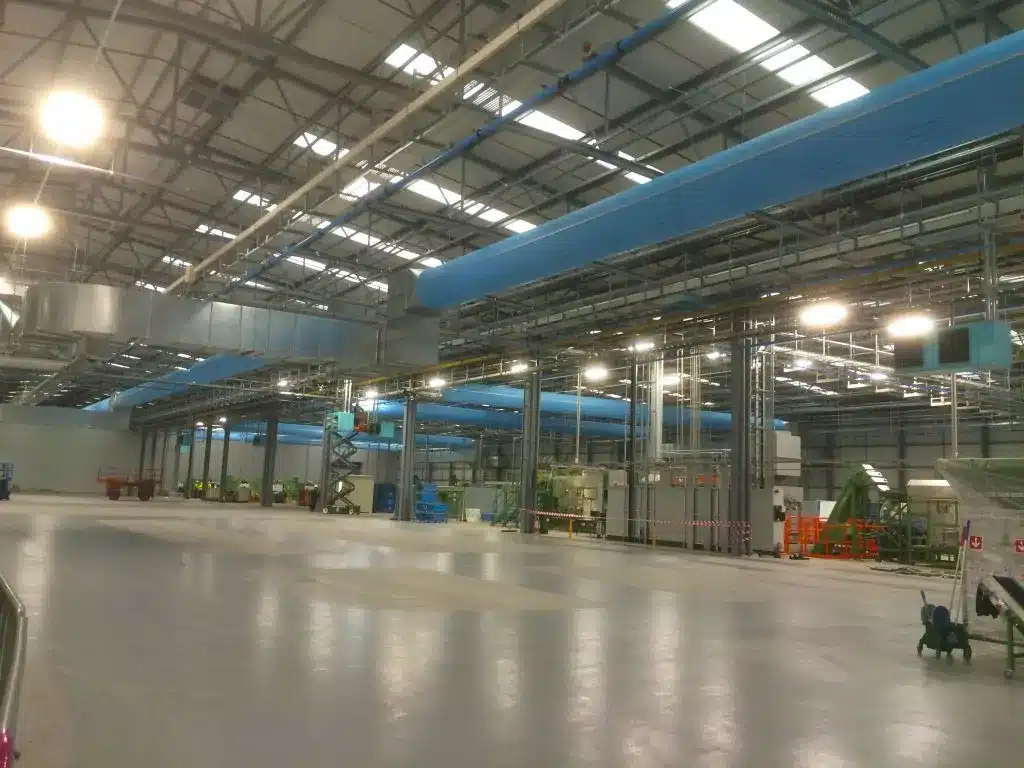
Warehouses are challenging environments when it comes to ventilation and temperature control. Large open spaces, high ceilings, constant movement of goods, and frequent door openings all affect how air behaves. Traditional metal ductwork has long been used in these settings, but fabric ducting is increasingly being considered as an alternative. The question is whether it performs well in real warehouse conditions.
To answer that, it helps to look at how air actually needs to move in a warehouse rather than focusing only on the material of the duct.
Can fabric ducts manage large volumes of air?
Warehouse ventilation often require significant airflow to maintain a stable temperature and acceptable air quality. In high roof spaces, warm air tends to rise and sit above working areas. If air is introduced too forcefully or from limited points, it can create drafts without properly mixing the space.
Fabric ducting distributes air along its length through carefully designed perforations or diffusers. In practice, this can allow for more even air distribution across wide areas. Instead of pushing air from a single grille, the system spreads it more gradually. For staff working on picking lines or packing benches, this often results in a more comfortable environment.
Do fabric ducts adapt to different heating and cooling needs?
Warehouses may require heating in winter and cooling in summer. Fabric ducting is designed to handle both hot and cold air. The way air is delivered can be adjusted through the design of the fabric and the positioning of the outlets.
In heating mode, air can be directed downwards to reduce the effect of warm air gathering near the roof. In cooling mode, airflow can be set up to avoid cold spots or excessive drafts. This flexibility is useful in buildings where usage changes throughout the year.
How is warehouse ventilation installed?
Weight is an important factor in warehouse environments. Fabric ducting is significantly lighter than traditional metal ductwork. This can reduce the load on roof structures and simplify installation. In some cases, it may also make future alterations easier if the layout of the warehouse changes.
Installation time can be shorter because sections are lightweight and can be suspended from cable systems. For operational warehouses, this can reduce disruption during upgrades or maintenance.
How are fabric ducts maintained?
Warehouses that store food products, pharmaceuticals, or sensitive goods must consider hygiene. Fabric ducting can be removed and washed, which helps maintain cleanliness. Dust build-up is a common issue in large spaces, and being able to clean ducting more thoroughly can support better air quality.
That said, maintenance still needs planning. The fabric must be inspected for wear and cleaned at appropriate intervals. A well-designed system will consider access and removal during the planning stage.
Are fabric ducts durable?
Warehouses can be tough environments. Forklifts operate at height, temperature fluctuations occur, and dust levels may be high. Fabric ducting must be selected carefully to match these conditions.
For many standard distribution and storage facilities, fabric ducting performs well when properly specified. The key is understanding airflow requirements and environmental factors rather than assuming one solution suits all.
Fabric ducting can be a practical and effective option for warehouses when the design reflects how the space is actually used. Even air distribution, lighter structural load, and washable materials are genuine advantages. As with any system, performance depends on correct sizing and installation.
For warehouse operators reviewing their ventilation strategy, fabric ducting is worth considering as part of a broader assessment of airflow, comfort, and operational needs.
FAQs
Does fabric ducting work in high ceiling warehouses?
Yes, when designed correctly, it can distribute air evenly across large open areas.
Can fabric ducting handle both heating and cooling?
It can be configured to deliver warm or cool air depending on seasonal requirements.
Is fabric ducting easy to maintain?
Many systems can be removed and washed, which helps support hygiene standards.
Is it durable enough for industrial use?
When specified appropriately, it can perform well in many warehouse environments.
Is installation disruptive?
Due to its lightweight design, installation can often be quicker and less intrusive than traditional ductwork.
Looking for more information?
Our experts are on hand to answer any questions. Why not give us a call or drop us a message, We’ll work with you to find the right solution.
Contact us
